by Steven Lindner | Jan 13, 2015 | Candidate Assessment and Selection, Recruitment Process Outsourcing |
This is a continuation of How Will ‘Ban the Box’ Trends Change Recruitment Traffic: Part I of II from Monday, January 12, 2015.
Will the Ban the Box Laws Help the Employer or Candidate?
While it is obvious that those candidates with a criminal history may benefit from the Ban the Box laws that are trending in the United States, the benefits to employers are less clear. Most States implementing a Ban the Box law do not require employers to forego the criminal background check. Instead, they require the background check to be pushed later in the hiring process. Typically after a conditional offer has been made. New Jersey’s Opportunity to Compete Act specifically states “that many individuals with prior criminal histories pose no greater risk of future criminality than do people with no criminal history and are equally qualified, reliable, and trustworthy candidates for employment.” If employers follow this advice, it would suggest that employers would have a larger pool of candidates from which to select from and hire.
For Employers that currently conduct criminal background checks prior to making a job offer, limiting criminal background checks to candidates who have received and accepted offers of employment will reduce spending on criminal background checks. However these savings will be more than offset by the increased number of interviews and job offers that will need to be rescinded as a result of applicants who become disqualified based on their criminal histories. Employers will also see increased costs in complying with these regulations since many states, like New Jersey, provide specific rules, procedures and forms that must be followed and completed in order to rescind an offer of employment based on a criminal background check. Although not required under the NJ Law, many employers may choose to delay filling an open position with another qualified candidate who has passed the background check until the initial candidate has had the requisite time provided under the law to respond and challenge the employer’s decision to rescind their employment offer.
Can An Employer Withdraw an Offer After the Criminal Background Check?
Yes. Employers are not required to hire someone who is no longer qualified as a result of their criminal history. It is important to note that if an employer wants to rescind an offer to an individual after the criminal background check has been completed, employers must follow the guidelines provided by the respective governing authority, whether Federal, State and/or Municipality. Each governing authority is going to have its own set of procedures and rules for an employer to follow. For instance, in New Jersey, a candidate must receive written notice of an offer withdrawal from the employer and be provided ten days to respond with any additional information or evidence. A specific form is provided for employers to use.
State and local legislation does not override any existing federal employment laws. State and local laws complement Federal laws. Thus, if you are an employer in a state or municipality that does not have a “Ban the Box” law, you still need to follow Federal laws regarding rescinding offers of employment.
What should Employers do to Comply with “Ban the Box” laws?
- Review your State and Local laws requiring the use of criminal historyinformation for the purpose of making a decision to hire or not hire.
- Eliminate language in your job ads that suggests aperson with one or more crimes, or who has been arrested, is not eligible for your job.
- Eliminate questions regarding convictions, arrests and crimes from your job application.
- Train hiring managers and recruiters to avoid asking about applicants’ criminal histories until an offer of employment is made.
- Review your policies regarding how offers of employment will be rescinded and ensure you have clear guidelines as to how felonies and misdemeanors will be evaluated in order to determine if they are permissible or disqualifiers for each unique job.
- When in doubt consult your labor attorney before acting.
For recruitment assistance and help in ensuring a positive candidate experience for the truly qualified please contact us at https://www.workplacegroup.com/contact/
by Steven Lindner | Jan 12, 2015 | Candidate Assessment and Selection, Recruitment Process Outsourcing |
There is a sweeping trend of new employment laws surfacing around the United States that will require employers to delay any knowledge of a candidate’s criminal history until it has been determined that the candidate has met all other requirements of the job. Employers who currently conduct criminal background checks prior to extending a written job offer may now need to change their workflow and interview candidates who are otherwise qualified. Of course, exceptions do apply for positions that require licensure and certification.
This “Ban the Box” trend has been adopted by at least 13 states as well as local municipalities that have passed legislation that requires employers to remove any questions about a person’s criminal history on their employment applications. Additionally, employers may not publish employment advertisements indicating that a person with one or more crimes, or has been arrested, is not eligible for a job. New Jersey has become one of the latest states to implement its version of the law, which goes into effect on March 1, 2015. In addition to the 13 states, local municipalities including San Francisco, Washington D.C., Seattle, Philadelphia, Baltimore and Buffalo have all implemented similar laws.
What Caused “Ban the Box” Laws to Start Taking Shape?
Most job applications require candidates to indicate if they “have been convicted of any criminal offense in the past.” If the candidate has been convicted of a criminal offense, the job application will require the job seeker to describe the nature of the offense, date of the offense, location of the court that processed the offense and the outcome. Many Recruiters, Human Resource Managers and Hiring Managers also ask questions about a job-seeker’s criminal history during the interview process. As a result of inquiries regarding job seekers’ criminal histories, many potentially qualified candidates get passed up and are eliminated before they have had an opportunity to fully demonstrate their qualifications to successfully perform the job. Individuals with criminal histories who are trying to re-enter and become a positive contributor to society have found it increasingly difficult to change his or her life. “Ban the Box” laws are designed to eliminate employment discrimination for those with criminal histories.
New Jersey’s “Opportunity to Compete Act”
New Jersey’s version of the “Ban the Box” law is called the Opportunity to Compete Act and will go into effect on March 1, 2015. The Act is considered more of a procedural practice and does not prevent employers from conducting background checks. It does delay the criminal background check until later in the hiring process so as to encourage employers to focus on the candidate’s skills and qualifications for the position. The candidate’s criminal history becomes secondary information once the employer decides to move forward with a particular candidate due to his or her skills and qualifications.
New Jersey’s Opportunity to Compete Act does not force an employer to hire anyone with a criminal record or an unqualified job-seeker. To sum it up, this Act asks employers to consider an applicant’s complete application and give someone who may have changed his or her life around the opportunity to get hired by an employer. Employers who have 15 or more employees must wait until after an applicant has received a conditional offer from the employer, in order to ask about and conduct an investigation of the candidate’s criminal history.
How Will ‘Ban the Box’ Affect Employers Recruiting Practices?
It is apparent that the Opportunity to Compete Act and other ‘Ban the Box’ legislatures will change how employers recruit, their budgets and hiring timelines. The WorkPlace Group will take a look at what you, as an employer, should know about ‘Ban the Box’ acts as we move into 2015. Stay tuned for Part II to learn what actions, if any, you should prepare for.
by Steven Lindner | Aug 4, 2014 | Industry Research and Recruiting Metrics, Recruitment Process Outsourcing, Talent Acquisition |
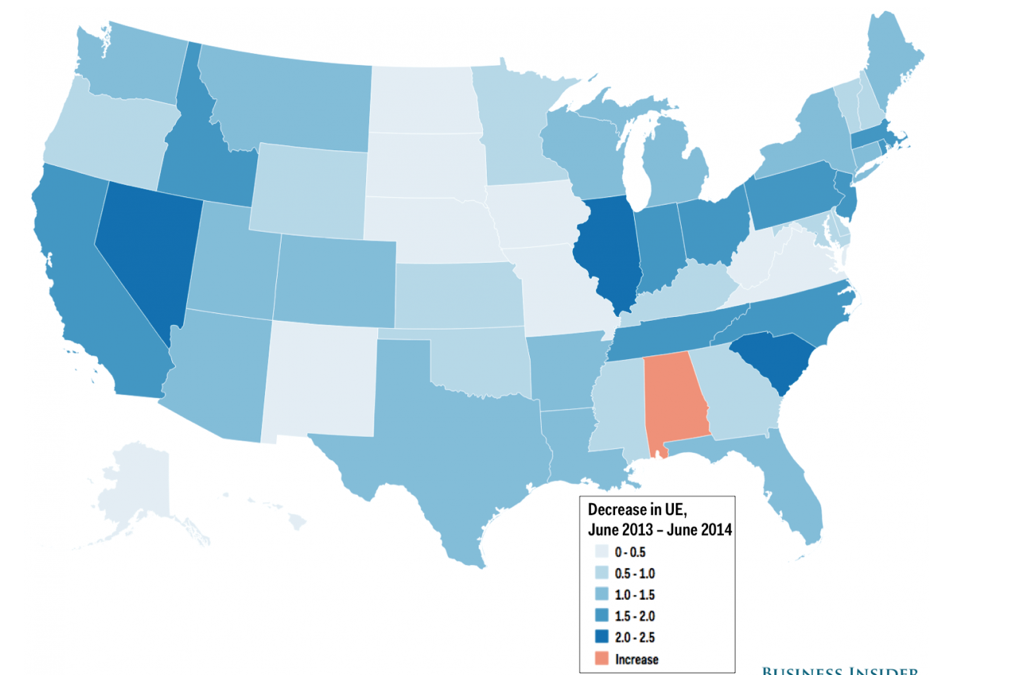
According to the United States Bureau of Labor Statistics, the June employment report marks the fourth consecutive month of job growth. With the unemployment rate falling to 6.3% (as of March 20, 2015 the unemployment rate is 5.5%), less people are scrambling for a job.In fact, 1.4 million new jobs have been created between January and June of 2014. This is the largest gain seen since 2006 (The Economist, July 19 – 25, 2014, p. 22).
With fewer job seekers on the market, recruiting qualified candidates becomes more difficult. Employers must now begin to consider including relocation, wage increases, and employee engagement tactics into their recruitment strategy.
Relocation:
Employers must now consider offering relocation assistance to qualified job applicants, particularly to applicants with specialized skill sets. Relocation assistance now needs to be part of an employer’s recruitment strategy even for hourly and non-senior roles.
Economic growth triggers recruitment challenges for employers. Various industries including education and health services, finance, leisure and hospitality, professional and business services, and manufacturing have recorded employment gains in June. Companies that need to hire individuals with specialized skill sets or particular expertise such as bilingual fluency or computer programming are most affected.
With unemployment rates as low as 3% in some parts of the U.S., the pool of available talent is much smaller than it was several years ago. Employers now need to look outside of their local job market to fill their job openings.
Relocation has most often been limited to those in the most senior level roles. However, the largest employment growth has been seen in hourly and junior level roles. This places new pressures on employers who need individuals with specialized skill sets that may be scarce or in high demand in their local markets. For example, employers who need bilingual customer service representatives or I.T. technical support representatives, or need individuals with any type of specialized skill set will need to offer some type of relocation assistance. Otherwise, they risk not filling their open positions.
Implement Incentives:
Candidates who are not actively seeking jobs, also known as passive candidates, are even harder for employers to attract. Passive candidates are gainfully employed and, as such, require significant incentives to resign their current position. Higher wages are an obvious motivator. However, given the fact that the majority of new jobs created have been for low wage earners, these individuals are particularly attracted to opportunities offering better work-life balances and career advancement opportunities.
Do Something Different to? Motivate Candidates To Apply:
While incentives attract the candidate,they only work if candidates are aware of them. Placing job ads and waiting for candidates to apply is no longer sufficient. With so many job ads and social media campaigns being conducted, employers need to get creative in how they capture job candidates’ attention.
During the holidays, we created a “Use Your Resume to Fight Hunger Campaign.” For every qualified application received, we donated much needed food to the Salvation Army. This campaign brought thousands of unique applicants to our client. Candidates went the extra step to complete the application process because they felt they were using their time and resume for a good cause while pursuing a career-growth opportunity.
With the growing numbers of new jobs being created and a rapidly decreasing unemployment rate, employers need to consider the above factors in their recruitment plans. By rethinking their approach, employers can get the attention of top talent in an economy with dwindling supply. As a Recruitment Process Outsourcing provider, we not only find, attract and assess talent but provide counsel to companies on ways to make job opportunities appealing to the talent they need.

by Steven Lindner | Mar 27, 2014 | Industry Research and Recruiting Metrics, Recruitment Process Outsourcing |
In the dynamic landscape of modern digital communication, short-form video content has emerged as an essential tool—not just for creators and influencers, but for businesses, educators, and enterprise teams. Platforms like TikTok are revolutionizing how organizations communicate, educate, and market their ideas. However, as the reliance on video grows, so does the demand for smarter, more efficient content management solutions.
Enter the new generation of download utilities—sophisticated tools such as the TikTok downloader and TikTok watermark remover—designed to optimize how video content is retrieved, repurposed, and reused in professional environments.
The Business Case for Short-Form Video
Short-form video is no longer the domain of personal entertainment alone. In corporate settings, TikTok-style content is being adopted for:
- Employee onboarding and training modules
- Real-time marketing campaigns
- Executive communications and town halls
- Product demos and client engagement assets
Organizations leveraging TikTok video downloader tools are finding greater flexibility in content delivery, enhanced engagement, and cost-effective ways to repurpose high-performing media across channels.
Why Downloading TikTok Videos Adds Strategic Value
The ability to download TikTok videos securely and efficiently is more than a convenience—it’s a competitive advantage. A trusted TikTok video downloader enables:
- Permanent access to time-sensitive or trending content
- Seamless integration into corporate LMS or CRM platforms
- Rapid development of branded educational resources
Equally valuable is the capability to remove embedded logos and user IDs through a TikTok watermark remover, which enhances professionalism and aligns content with corporate standards.
A standout tool in this domain is , offering secure, high-speed downloads and native watermark-free functionality.
Enterprise-Level Use Cases
- Internal Communications: Human Resources can utilize short-form clips for compliance training or wellness campaigns.
- Marketing Strategy: Content teams can repurpose viral TikToks for cross-platform storytelling on Instagram Reels or YouTube Shorts.
- Executive Outreach: Leaders can adapt industry-specific videos into engaging internal announcements or investor presentations.
All of these workflows benefit from streamlined access through a dedicated TikTok downloader.
Data Privacy, Ethics, and Responsible Usage
When integrating downloaded content, organizations must balance efficiency with compliance. Best practices include:
- Ensuring content is used under Fair Use or with permission
- Avoiding any modifications that may misrepresent original creators
- Utilizing platforms like TikTok watermark remover solely for editorial or educational repurposing
Trusted tools like ssvtiktok.com do not store user data or downloaded files, supporting enterprise-level security protocols.
Conclusion: A Smarter Path Forward
In 2025, digital agility is a critical business imperative. Forward-thinking companies are already investing in tools that enhance their media strategy—TikTok video downloader platforms among them. These solutions empower teams to operate faster, maintain brand consistency, and unlock greater value from short-form video content.
By leveraging utilities like TikTok downloader and TikTok watermark remover, organizations can transform the way they educate, communicate, and inspire—building a future-ready digital culture.

by Steven Lindner | Feb 27, 2014 | Hiring and Retention, Recruitment Process Outsourcing, Talent Acquisition |
Employee retention continues to be one of the biggest challenges faced by modern organizations. While compensation and benefits play an important role, one of the most overlooked factors is the clarity of expectations set from day one.
Why Expectations Matter
Employees thrive in environments where roles and responsibilities are clearly defined. Ambiguity leads to disengagement, miscommunication, and ultimately, higher turnover rates. Employers who invest in proper onboarding and performance feedback generally see stronger long-term retention.
Enhancing Communication Through Digital Media
One modern approach companies are using to enhance communication is through short-form video platforms like TikTok. From onboarding intros to cultural snippets, companies are finding creative ways to engage employees visually.
👉 Want to reuse or showcase your team videos? Use this free TikTok video download tool to capture and archive employee engagement content.
Boost Team Tools with Video Strategy
Video is no longer just for marketing — it’s a culture tool. HR teams can document onboarding tips, leadership messages, and internal highlights.
👉 Explore powerful editing tools with TikTok video tools — perfect for HR and internal communication strategies.
Conclusion
At its core, employee retention is built on trust, transparency, and clarity. Set expectations early and communicate consistently — through meetings, feedback, and yes, even engaging videos.